
The biggest misconception in Caribbean travel is that “all-inclusive” means no surprises at checkout. I believed that too, until a trip to Punta Cana ended with a $340 bill for extras I never consciously chose — upgraded dinner reservations that required pre-booking or you simply lose access to the specialty restaurant, a beach cabana a pool attendant nudged me into, motorized watersport sessions listed as “included” in the package but charged separately at the activity desk, and a resort fee that somehow existed on top of the all-in price I’d already paid. None of it was hidden. But none of it matched the brochure.
After six trips to the DR across four different resort zones, here’s an honest breakdown of what packages actually deliver — and which ones are worth booking in 2026.
Punta Cana, La Romana, or Puerto Plata: A Direct Zone Comparison
Most travelers default to Punta Cana because it dominates search results and has the broadest direct flight options from the US, Canada, and Europe. That’s a reasonable instinct, not a bad one. But the Dominican Republic has three distinct resort corridors, and defaulting to the most searched one isn’t always the right call.
| Zone | Best Suited For | Avg. Package Price (7 nights/person, incl. flights) | Beach Quality | Off-Resort Access |
|---|---|---|---|---|
| Punta Cana / Bávaro | First-timers, families, couples | $1,100–$2,800 | Excellent — calm Caribbean water, wide white sand | Moderate; tourist excursions easy to book on-site |
| La Romana | Adults, golfers, quieter pace | $1,400–$3,500 | Good | High — less commercial corridor, easier to explore locally |
| Puerto Plata | Budget travelers, adventure seekers | $800–$1,500 | Average — rougher Atlantic-facing coast | Excellent — 27 Charcos, Isabel de Torres cable car, colonial town |
| Samaná Peninsula | Eco-travelers, couples, nature | $1,200–$2,200 | Exceptional — some of the DR’s most unspoiled beaches | Limited resort options; 3-hour transfer from SDQ airport |
The table doesn’t capture one important nuance: La Romana feels more authentically local because the resort corridor is far less built up. You can actually leave the complex without walking directly into a packaged tourist zone. Puerto Plata has the best non-beach activities in the country — the 27 Charcos waterfall system is 45 minutes out, and the cable car up Mount Isabel de Torres offers a view across the entire north coast — but the Atlantic-facing beaches are genuinely rougher and narrower than what the east coast delivers.
Samaná is worth mentioning separately because it’s the most underrated zone in the DR. From January through March, humpback whales breed in the Bahía de Samaná — one of the most accessible whale-watching experiences in the hemisphere. The trade-off is limited resort selection and a long transfer time from the main international airport.
My straightforward take: first-time visitors should book Punta Cana. Package pricing is more competitive, flight options are broader, and the beach genuinely delivers. Repeat visitors who want something different should look at La Romana or Samaná.
What “All-Inclusive” Actually Covers — and the $200–$400 Gap

This is where most DR vacations go sideways. The term “all-inclusive” is not standardized across Dominican Republic properties. It means something meaningfully different at a $900/person package than at a $2,500/person one, and resorts count on the fact that most guests don’t read the fine print before they board the plane.
What’s included at virtually every tier
Across the board — from budget-tier properties to premium all-inclusives — the baseline package covers: three daily meals at the main buffet, unlimited drinks at pool and swim-up bars using local brands, non-motorized watersports (kayaking, paddleboarding, snorkeling gear), daytime entertainment and nightly shows, and unrestricted use of pools and beach. That covers a perfectly functional week in the DR without any additional spend. The buffet at mid-tier resorts is genuinely good by resort-buffet standards, not just passable.
What costs extra — even at premium properties
Specialty restaurants almost always require advance reservations, and many resorts run a credit or points system that depletes before the week ends. At the Hard Rock Hotel & Casino Punta Cana, the daily dining credit included in the all-inclusive package doesn’t cover the full price of most specialty restaurants — guests pay the gap at checkout. Premium liquor — Johnnie Walker, aged tequila, top-shelf rum — costs extra everywhere except in explicitly stated luxury packages. Motorized watersports (jet skis, parasailing, banana boats) are almost never included in base packages despite “watersports included” language appearing in marketing materials.
Resort fees are a growing issue that doesn’t get enough coverage. Some properties marketed through major US package sellers like Apple Vacations charge a mandatory $15–$35 per room per night fee at checkout, on top of the all-inclusive price already paid. This doesn’t appear in most package listings until you read the fine print or call the resort directly.
How to read a package listing before you commit
Two phrases tell you almost everything. First: “unlimited à la carte restaurants included” — this means specialty dining is genuinely covered, not just the buffet. Second: “premium drinks package included” — this means top-shelf spirits are covered. If the listing says “house brands” or “local drinks,” you’re getting local rum and nothing else at the swim-up bar, and paying for anything above that.
One concrete action step: after booking, call the resort directly and ask about the specialty restaurant reservation policy. At the Iberostar Waves Grand Bávaro, guests can pre-book one specialty restaurant reservation per night of their stay — but only if they call in advance. Most guests don’t know this, arrive expecting to book on-site, and find no availability for the entire week.
The Booking Window That Changes the Price
Book 90–120 days out for the best combination of price and room availability. January through March packages run 25–40% higher than the same resorts in May or early June. The worst window is 14–30 days before departure — remaining inventory is thin and prices spike because the algorithm knows you’re motivated. Hurricane season runs June through November, but August and September carry the statistically highest actual storm risk. May, early June, and early November offer genuinely good pricing with manageable weather exposure — and most travel insurance policies cover trip cancellation and interruption from named storms, which largely offsets the downside of booking in shoulder season.
Five DR Resort Packages Worth Booking
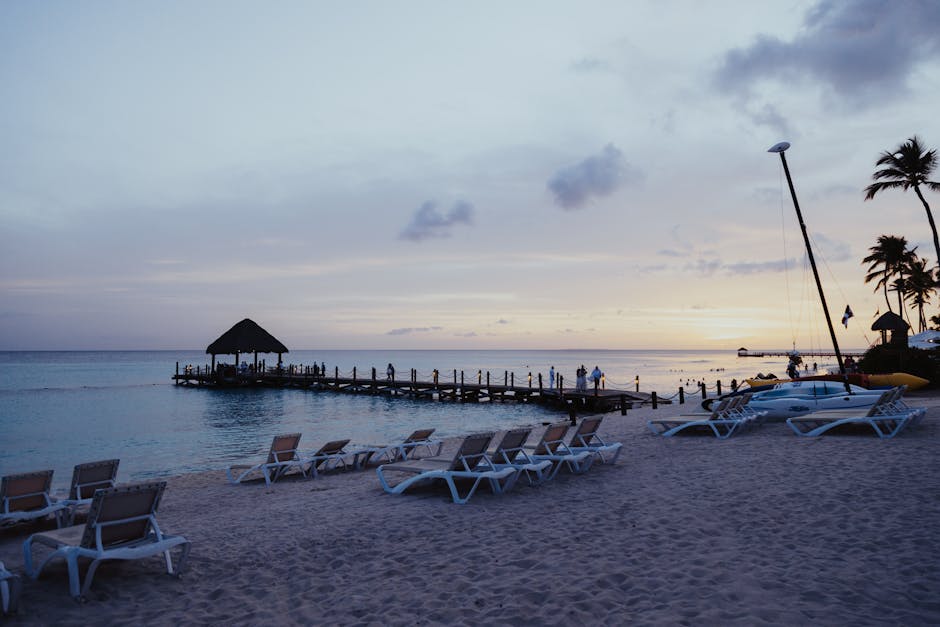
These are real properties with documented track records across multiple booking cycles. Per-person package prices include round-trip flights from the US East Coast and are approximate for 2026 — they shift with travel date and origin city.
- Barcélo Bávaro Beach Resort (Punta Cana) — $1,400–$2,000/person
The most consistent mid-range all-inclusive in Bávaro. The beach is a genuine stretch of white sand with calm water, and the main buffet quality sits above average for the price tier. Four specialty restaurants are included with dinner reservations — not on a depleting credit system. Works equally well for families and couples. Book the Barceló Premium room category if you want pool access closer to the beach; standard rooms are fine but the walk is longer than resort maps suggest. - Excellence Punta Cana (adults-only) — $2,400–$3,200/person
The best adults-only option in Punta Cana for couples who want actual quiet. Unlimited specialty dining is genuinely unlimited — no credit system, no reservation shortage. Butler service at higher room categories is worth paying for on a honeymoon or anniversary trip. The swim-out rooms face the adult pool, which is exactly the right configuration. This is my pick for couples who want the full all-inclusive experience without compromise. - Iberostar Waves Grand Bávaro — $1,600–$2,400/person
A good choice for families who want a notch above the standard experience without jumping to full luxury pricing. The main pool area is large enough that it rarely feels crowded, even at peak season. Important detail: the resort has two building sections with different service tiers. The Grand side includes butler service; the Waves side does not. Confirm which side your room is booked on before arrival, and pre-call to book specialty restaurant reservations. - Hard Rock Hotel & Casino Punta Cana — $1,800–$2,600/person
Best for travelers who want entertainment, nightlife, and a casino alongside the beach. This is explicitly not a relaxation resort — the pool area gets loud, the casino runs until late, and the whole property operates at a higher energy level than most DR all-inclusives. Budget an extra $50–$80/day if you plan to eat at specialty restaurants nightly, since the included dining credit doesn’t stretch that far. The swim-up suites are the best room upgrade on the property. - Zoetry Agua Punta Cana — $3,200–$4,500/person
The best boutique luxury option in the DR for travelers whose budget allows it. Adults-only, 96 suites, and genuinely quiet in a way that larger properties can’t replicate. Gourmet dining is included at a level that’s meaningfully different from standard all-inclusives — actual culinary variety across multiple venues, not a larger version of the same buffet. The beach is narrower than Bávaro’s main strip, but the resort feels like a private retreat rather than a small city that happens to be near the ocean.
A packing tip worth including here: bring fewer clothes than you think you need. DR all-inclusives run on a genuinely casual dress code. “No swimwear at dinner” is enforced at specialty restaurants, but a clean shirt and shorts clear that bar everywhere on property. You’ll regret four pairs of shoes before you’ll regret two.
Also: bring US dollars in small bills for tipping. Resort staff depend on gratuities — $1–$2 per drink at the bar or $3–$5 per day for housekeeping is the expected norm. ATMs in resort lobbies charge $5–$8 per withdrawal on top of your bank’s international transaction fee. Bring cash from home and skip the lobby machine entirely.
Three Decisions That Wreck Otherwise Good DR Trips
Booking the lowest package tier without checking which room category is included
Most DR resorts offer multiple room types within the same all-inclusive package: garden view, pool view, ocean view, junior suite, swim-out, and beachfront. The $1,100/person advertised price almost always corresponds to a garden-view room that’s a 10-minute walk from the beach and faces a parking lot or interior courtyard. Check the specific room category listed in the package description before confirming. Upgrading from garden view to ocean view typically costs $40–$80 per night extra and is genuinely worth it if beach proximity matters to how you spend your days.
Skipping travel insurance because “nothing will go wrong”
The Dominican Republic is a safe destination for tourists. Medical evacuation coverage is the real reason to buy insurance, not theft or lost luggage. If something serious happens — a bad injury, emergency surgery, a cardiac event — air evacuation back to the US can cost more than $50,000 out of pocket. DR hospitals in tourist zones handle minor emergencies competently; serious ones are a different situation. A comprehensive policy from a provider like Allianz or World Nomads costs $80–$150 for a week-long trip. That math is not complicated, and hurricane-season coverage makes it even more straightforward for anyone traveling May through November.
Buying excursions through the resort desk at resort markup
Catamaran trips to Isla Saona, ATV tours through the countryside, zipline parks, and whale-watching in Samaná (January through March) are all worth doing. They are not worth the 40–60% premium the resort excursion desk charges over what independent operators outside the gates offer for the same experience — often with smaller group sizes. The easiest way to find the right operators: ask resort staff which companies they personally use on their days off. That question consistently gets honest, unscripted answers.
Most DR vacations that disappoint come down to the same pattern: a resort that didn’t match what the traveler actually wanted, a room upgrade that wasn’t considered upfront, and excursion prices paid at full resort markup. Fix those three decisions before you book and you won’t end up at day-seven checkout staring at $340 in charges that weren’t in the brochure. The DR is one of the most genuinely good-value Caribbean destinations still running — but only when you book it with both eyes open.