
Yellow fever appointments at Quebec travel clinics sell out four to six weeks before peak travel season. If your flight is in February and you’re thinking about vaccines in January, you may already be too late for certain destinations. That’s not a scare tactic — it’s a booking reality that catches Quebec travelers every year, and it’s entirely avoidable.
This guide covers which vaccines you need, where to get them in Quebec, what RAMQ actually covers, and how to time everything so you’re not scrambling the week before departure.
Where Quebec Residents Get Travel Vaccines: A Direct Comparison
Three realistic options exist in Quebec. Each has a different scope, cost structure, and wait time. The right choice depends entirely on your destination.
| Option | Examples | Vaccines offered | Yellow fever certified? | Typical wait | Consultation fee |
|---|---|---|---|---|---|
| Travel health clinic | Passport Santé, Clinique Santé Voyage (Montreal), Clinique Voyages-Santé Québec | Full range: rabies, Japanese encephalitis, yellow fever, all standard travel vaccines | Yes | 1–3 weeks; faster off-season | $75–$120 per consultation |
| Pharmacy | Jean Coutu, Pharmaprix, Brunet | Hepatitis A, Hep B, Typhoid, Flu, Tdap, some meningococcal | No | Same day to 3 days | No consultation fee; vaccine cost only |
| Family doctor / CLSC | CLSC network, private clinics | Routine vaccines (MMR, Tdap, flu); limited travel-specific options | No | 2–6 weeks for appointment | Covered by RAMQ if billed as clinical visit |
When a travel clinic is worth the consultation fee
If you’re going somewhere with yellow fever entry requirements — most of sub-Saharan Africa, parts of South America — or heading anywhere where rabies pre-exposure makes practical sense, book a certified travel clinic. The $75–$120 consultation fee gets you a nurse or physician who reviews your itinerary against your full vaccine history and issues a Carte Jaune (International Certificate of Vaccination) if you need proof at the border.
Passport Santé has locations in Montreal, Quebec City, and several regional centers. Clinique Santé Voyage on Sherbrooke Street in Montreal is another well-established option. Both run full travel consultations and require appointments. Book early — yellow fever appointment slots in particular disappear fast before winter travel season.
When the pharmacy is the smarter move
For Mexico, Cuba, the Dominican Republic, Portugal, or most of Western Europe — destinations where you need Hepatitis A, possibly Typhoid, and want to confirm your Tdap is current — Jean Coutu and Pharmaprix handle all of it without a referral or wait. Quebec pharmacists have had expanded vaccination authority since 2014. No appointment needed in most cases. You can walk in and be vaccinated in 20 minutes. Faster, cheaper for routine vaccines, no consultation overhead.
Required vs. Recommended: The Distinction That Actually Matters at the Border

Confusing these two categories either costs you money on vaccines you don’t need or gets you denied entry at a border crossing.
The one vaccine that is legally required
Yellow fever is the only vaccine in 2026 that certain countries mandate as a condition of entry — not a suggestion, not a recommendation, a legal requirement. Countries with mandatory proof include much of sub-Saharan Africa (Angola, Cameroon, Democratic Republic of Congo, Ghana) and parts of South America (Bolivia, Ecuador, and Brazil for travelers entering certain states). You need proof on an official International Certificate of Vaccination — the yellow card. No card means no entry. Some countries refuse boarding before you even land.
The yellow fever vaccine — sold in Canada under the brand name Stamaril — provides lifelong protection for most people after a single dose. It must be administered at a WHO-certified vaccination center. Pharmacies cannot give it. Only certified travel clinics can.
Strongly recommended vaccines — and why treating them as optional is a mistake
Recommended vaccines aren’t mandatory at the border. But skipping them is a risk calculation most travelers underestimate.
- Hepatitis A (Havrix or Vaqta): Standard for any destination with variable water and food safety — Mexico, Thailand, Egypt, India, Central America. A single primary dose provides protection within two weeks; the booster at 6–12 months extends coverage to 20+ years.
- Twinrix: The combined Hepatitis A and B vaccine. One series instead of two. Most Quebec travelers heading anywhere with longer-term health risk get Twinrix instead of separate vaccines.
- Typhoid (Typhim Vi injection or Vivotif oral): Two formats. Typhim Vi is a single injection lasting two years. Vivotif is four oral capsules taken over seven days, lasting five years — better for repeat travelers. Both protect against typhoid fever in regions with contaminated water.
- Dukoral: Oral vaccine providing protection against cholera and some strains of traveler’s diarrhea (ETEC). Two doses taken 1–6 weeks apart. Most relevant for travelers to very high-risk areas, aid workers, or anyone with a sensitive digestive system who can’t afford to be sick on a trip.
- Rabies pre-exposure series: Three doses over a minimum of 21 days. Recommended for long-term travel, rural Southeast Asia, Central America, or sub-Saharan Africa — anywhere you’d be far from a facility with rabies immunoglobulin. Pre-exposure doesn’t eliminate the need for post-exposure treatment, but it simplifies the protocol and dramatically extends the safe window to reach care.
- Meningococcal (Menveo or Nimenrix): Required for the Hajj. Recommended for travel through the sub-Saharan meningitis belt.
Routine vaccines that get overlooked
Travel clinics regularly discover that people’s Tdap (tetanus, diphtheria, pertussis) hasn’t been boosted since childhood. MMR (measles, mumps, rubella) is another gap — measles outbreaks in Europe have caught unvaccinated travelers off guard in recent years. Bring whatever vaccination records you have to the appointment. It saves time and may save money if you’ve already had vaccines that don’t need repeating.
What RAMQ Covers — and the Bill That Catches People Off Guard
RAMQ does not cover most travel vaccines. Full stop.
RAMQ covers vaccines on the Quebec provincial immunization schedule — routine childhood vaccines, annual flu shots, and specific vaccines for designated high-risk groups. Hepatitis A for a trip to Costa Rica: not covered. Yellow fever, typhoid, rabies, Dukoral: not covered. Some private group insurance plans reimburse travel vaccines under preventive care or paramedical benefits — worth checking before you pay — but most don’t.
Here are realistic 2026 costs at Quebec travel clinics and pharmacies:
| Vaccine | Doses needed | Cost per dose (CAD) | Total cost estimate |
|---|---|---|---|
| Hepatitis A (Havrix / Vaqta) | 2 (primary + booster) | $85–$100 | $170–$200 |
| Twinrix (Hep A+B combined) | 3 standard / 4 accelerated | $90–$110 | $270–$440 |
| Typhoid injection (Typhim Vi) | 1 | $55–$75 | $55–$75 |
| Typhoid oral (Vivotif) | 4 capsules per course | $65–$80 per course | $65–$80 |
| Yellow fever (Stamaril) | 1 (lifelong) | $150–$200 | $150–$200 |
| Rabies pre-exposure series | 3 | $180–$220 | $540–$660 |
| Dukoral (oral cholera/ETEC) | 2 | $45–$60 | $90–$120 |
| Meningococcal (Menveo / Nimenrix) | 1–2 | $130–$160 | $130–$320 |
A Quebec traveler heading to Southeast Asia — getting Twinrix on an accelerated schedule, typhoid injection, and a travel clinic consultation — can realistically expect to spend $400–$600 before the flight. Add a rabies pre-exposure series and you’re at $900–$1,100 in vaccines alone. Budget for this upfront. It’s not a surprise if you plan for it.
How Far in Advance to Start: A Timeline That Actually Works
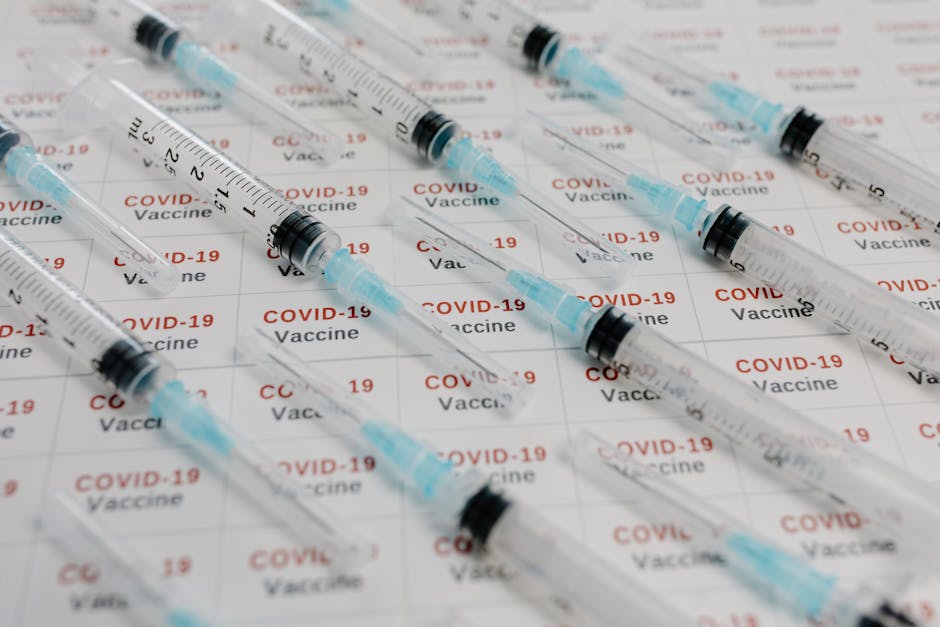
- 8 weeks before departure: Book your travel clinic appointment. This is the minimum lead time for destinations requiring multi-dose series. Earlier is better — appointments fill faster than most people expect.
- 6–8 weeks out: Start any multi-dose vaccine series. The standard Twinrix schedule is doses at 0, 1 month, and 6 months. The accelerated schedule (doses at day 0, 7, and 21, with a fourth dose at month 12) gives faster protection but costs more and requires a fourth dose later.
- 3–4 weeks out: Single-dose vaccines — yellow fever (Stamaril), typhoid injection (Typhim Vi) — are fine at this point. Yellow fever takes 10 days to reach full protection. Don’t cut it closer than that.
- 1–2 weeks out: Flu shot, Tdap booster if needed. These require no lead time and are handled quickly at any pharmacy.
- Rabies exception: The pre-exposure series is three doses over a minimum of 21 days. If you decide you want it, start as early as possible. There is no way to compress it further.
One specific note on Vivotif: the oral typhoid capsules must be refrigerated, taken every other day on an empty stomach, and the full four-capsule course completed at least one week before potential exposure. It sounds simple until someone forgets a dose mid-course. The injectable Typhim Vi avoids this entirely if you’d rather not manage a refrigerated course at home.
Four Mistakes Quebec Travelers Make with Travel Vaccines
- Assuming the pharmacy handles everything. Jean Coutu and Pharmaprix are excellent for Hep A, typhoid, and routine boosters. They cannot administer yellow fever. If your destination requires it, you need a certified travel clinic — no workaround exists.
- Booking the travel clinic too late for a full series. Showing up six days before your flight and asking for Twinrix doesn’t work. The standard schedule spans months. The accelerated schedule spans 21 days. There is no same-week option for multi-dose series.
- Not bringing vaccination records to the consultation. Travel clinic appointments average 30–45 minutes. A significant portion of that time disappears reconstructing your vaccine history from memory. Bring your carnet de vaccination or any documentation you have — it saves time and may save money if you’ve already had vaccines that don’t need repeating.
- Treating “recommended” as “optional if I feel healthy.” Hepatitis A in a healthy adult is rarely fatal — but it’s a 6–8 week recovery period. Typhoid is unpleasant and entirely preventable. The fact that something is recommended rather than required doesn’t make the risk trivial. “I’ve been to Mexico before and was fine” is not a vaccination strategy.
Destination Quick-Reference: What Quebec Travelers Actually Need

| Destination | Required | Strongly recommended | Also consider |
|---|---|---|---|
| Mexico / Caribbean (resorts) | None | Hep A, Typhoid | Tdap booster, Dukoral |
| Southeast Asia (Thailand, Vietnam, Indonesia) | None (yellow fever if arriving from endemic country) | Hep A, Typhoid, Hep B | Rabies pre-exposure, Japanese encephalitis (rural/long stays) |
| Sub-Saharan Africa | Yellow fever (most countries) | Hep A, Typhoid, Meningococcal, Malaria prophylaxis | Rabies, Dukoral |
| India / South Asia | None | Hep A, Typhoid, Hep B | Rabies, Japanese encephalitis (rural), Dukoral |
| Western Europe / USA | None | Tdap booster if outdated, MMR if not up to date | Flu shot (seasonal) |
| South America (Amazon/Andes region) | Yellow fever (Brazil, Bolivia, Ecuador — region dependent) | Hep A, Typhoid | Rabies, Dukoral, Malaria prophylaxis |
One clarification on malaria: prophylaxis medications — Malarone (atovaquone/proguanil), Doxycycline, and Lariam — are prescription drugs, not vaccines. Your travel clinic physician or family doctor prescribes them. Malarone is the most commonly prescribed option for short-term travel in Canada; it runs roughly $5–$8 per tablet taken daily. Factor this into your pre-trip health budget alongside vaccine costs.
Where to Book: The Direct Answer
For any trip outside North America and Western Europe — book Passport Santé or your nearest certified travel health clinic, not a walk-in clinic, not just a pharmacy, at least eight weeks before departure. Bring your vaccination history. Know your rough itinerary. The clinician takes it from there.
For straightforward Caribbean or European trips: Jean Coutu or Pharmaprix, no appointment needed for most vaccines, done in under 30 minutes.
The one thing that wrecks an otherwise well-planned trip health-wise is waiting too long to start. Book the appointment the same week you book the flight.